

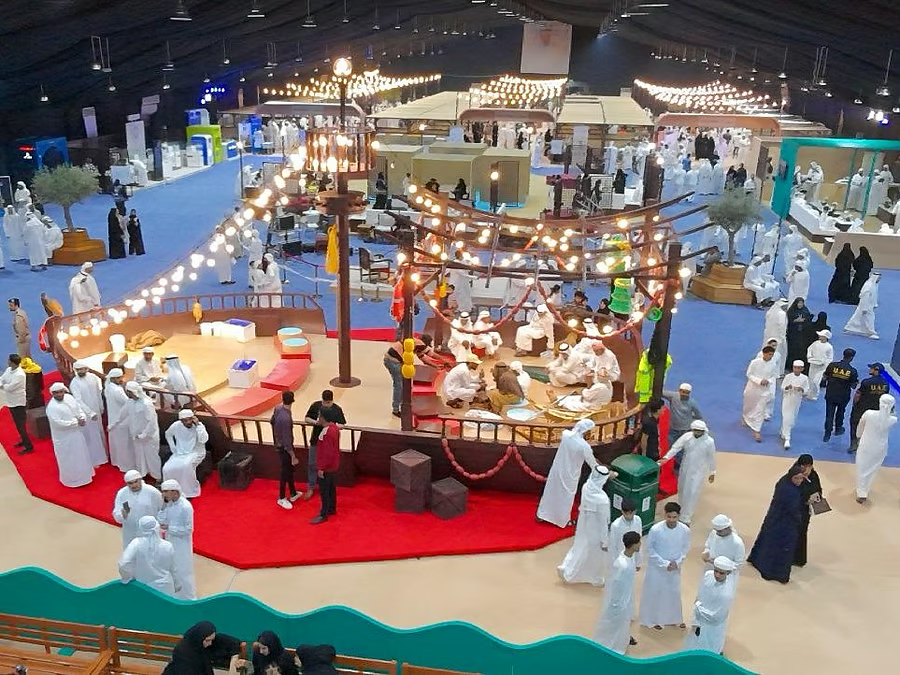
The 13th Al Maleh and Fishing Festival wrapped up on Sunday at Al Hisn Island in Dibba Al Hisn, bringing four days of activities centered on the UAE’s fishing traditions and maritime heritage.
Held from August 27 to 30, the festival was organized by the Sharjah Chamber of Commerce and Industry (SCCI) together with Dibba Al Hisn City Municipality. This year’s event recorded a 30 percent rise in visitors compared with the previous edition, while sales and financial returns exceeded AED1.4 million.
More than 80 exhibitors took part, representing a mix of government bodies, private companies, fishing businesses, and local producers. Around 20 participating entities came from the maritime and heritage sectors, while more than 50 productive families and home-based businesses presented their goods. Another 10 companies displayed fishing equipment, boats, and marine engines.
Keeping Traditional Fishing Skills Alive
One of the main draws was the Al Maleh Market, where visitors could see and purchase traditional salted and dried fish. Products included Al Qabab, Al Jara, Al Youbal, Al Sahnah, Al Awal, Al Jashah, Al Kana, Al Sadr, and Seahorse.
The market also gave visitors a look at the traditional methods used to prepare, salt, and dry fish. These techniques have been passed down through generations and remain closely connected to the coastal communities of the UAE.
Elsewhere at the festival, fishermen and craftspeople demonstrated skills that were once a routine part of life along the coast. Boatbuilding, sail-making, and fishing-net production were among the activities on display.
For younger visitors in particular, the demonstrations offered a practical introduction to occupations that helped shape the UAE’s maritime history.
A Marketplace for Local Producers
The festival was also designed to give small businesses and productive families a place to sell their work.
Alongside the Al Maleh Market, visitors could browse handcrafted goods, locally grown agricultural produce, and traditional food. A separate group of exhibitors focused on the more modern side of the maritime sector, displaying navigation systems, marine engines, and fishing equipment developed with marine environmental protection standards in mind.
Mohammad Ahmed Amin Al Awadi, Director-General of SCCI, said the continued growth of the festival reflected changes taking place in Sharjah’s Eastern Region, where heritage is increasingly being linked to economic activity.
He said there were ongoing efforts to turn traditional maritime occupations into a productive economic sector by combining established craftsmanship with modern production, wider distribution, and updated marketing methods.
“The Sharjah Chamber will continue to enhance the festival as an integrated platform and incubator for entrepreneurship across the national food industries, further reinforcing Sharjah’s position as a leading center for sustainable growth,” Al Awadi said.
Talib Abdullah Al Yahyai, Director of Dibba Al Hisn City Municipality, similarly pointed to the festival’s wider economic and community role.
He described the event as a platform that brings together heritage, tourism, economic development, community empowerment, and environmental sustainability. He also highlighted the opportunities it creates for productive families and maritime professionals to market their work and develop relationships with private-sector businesses.
Workshops, Competitions, and Maritime Performances
Education was another part of this year’s program, with visitors able to sign up for a series of workshops via a dedicated online platform.
The heritage workshops covered several aspects of traditional maritime life. The “Jahal” Workshop focused on marine pottery, while the “Al Samaj Bag” Workshop introduced participants to traditional seafaring tools and fish-salting practices. The “Precious Pearl” Workshop explored the history of pearl diving.
Visitors could also watch demonstrations of fishing-net making, sail weaving, and traditional boatbuilding.
Children and families took part in a series of competitions and hands-on activities, including “Valuable Fishing,” “Fish Tank,” “Bag Printing,” “Talli Keychain Making,” “Doll Tank,” and “Happy Family Marina.”
The program also addressed the sector’s future through awareness sessions on sustainable fishing and fisheries conservation.
Traditional folkloric performances rounded out the event, bringing maritime chants and other elements of coastal culture into the festival program.
With its combination of traditional food, crafts, fishing practices, workshops, and modern marine technology, the 13th Al Maleh and Fishing Festival once again brought the working traditions of the UAE’s coastal communities into a public setting while allowing local producers and maritime businesses to reach new audiences.
